

NEWS RELEASE
FOR IMMEDIATE RELEASE
DATE OF RELEASE: July 24, 2025
SUBJECT: Garrett County Health Department Reports Fifth and Sixth Animal Rabies Cases in 2025 — Both Involve Feral Cats
CONTACT PERSON: Bryce A. Manges, L.E.H.S. | TELEPHONE: 301-334-7760
The Environmental Health Services of the Garrett County Health Department reports the fifth and sixth laboratory-confirmed animal rabies cases for 2025. Both recent cases involve feral cats, increasing the total number of rabid feral cats to three within just over a month.
On July 15, 2025, a feral cat attacked a resident in the Accident area. The individual’s spouse euthanized the cat immediately and reported the incident to the Health Department. The victim sought Rabies Post-Exposure Prophylaxis (PEP) that same evening. Health Department personnel collected the cat specimen and sent it to the Maryland Department of Health Rabies Laboratory. On July 17, 2025, positive rabies test results were received. Following the Compendium of Animal Rabies Prevention and Control, 2016, the individual was notified to continue Rabies PEP.
A similar incident occurred on July 21, 2025, involving a McHenry area resident. Again, the spouse euthanized the feral cat and submitted the animal to Garrett County Animal Control, who contacted Environmental Health for testing. The victim began PEP immediately, and on July 23rd, the Maryland Department of Health confirmed the cat was rabid. The individual was notified to continue treatment.
The recent rabid feral cat cases, combined with cases from June, have resulted in eight known direct exposures within a six-mile radius. The Health Department urges all residents and visitors to remain vigilant around feral cats and any cats whose rabies vaccination status is unknown.
As previously emphasized, rabies poses a serious health risk to humans and animals. The virus typically incubates for 3 to 12 weeks, but it can range from several days to months. Infected animals may shed the virus 3 to 5 days before symptoms appear, and once clinical signs develop, rabies is almost always fatal within 10 days.
If you have been bitten by a wild or feral animal that cannot be captured, seek medical treatment immediately. If your pet is exposed to a wild or feral animal, do not handle it within two hours of contact. If it is necessary to handle your pet, make sure to wear protective gloves and immediately wash your hands thoroughly with soap and water.
Pet owners are urged to check the vaccination status of their dogs, cats, and ferrets. All dogs and cats are required, by law, to be vaccinated against rabies by four months of age and can be vaccinated as early as three months. Health Department Rabies Clinics will be held in September. For questions regarding rabies or rabies clinics, please contact Environmental Health Services at 301-334-7760.
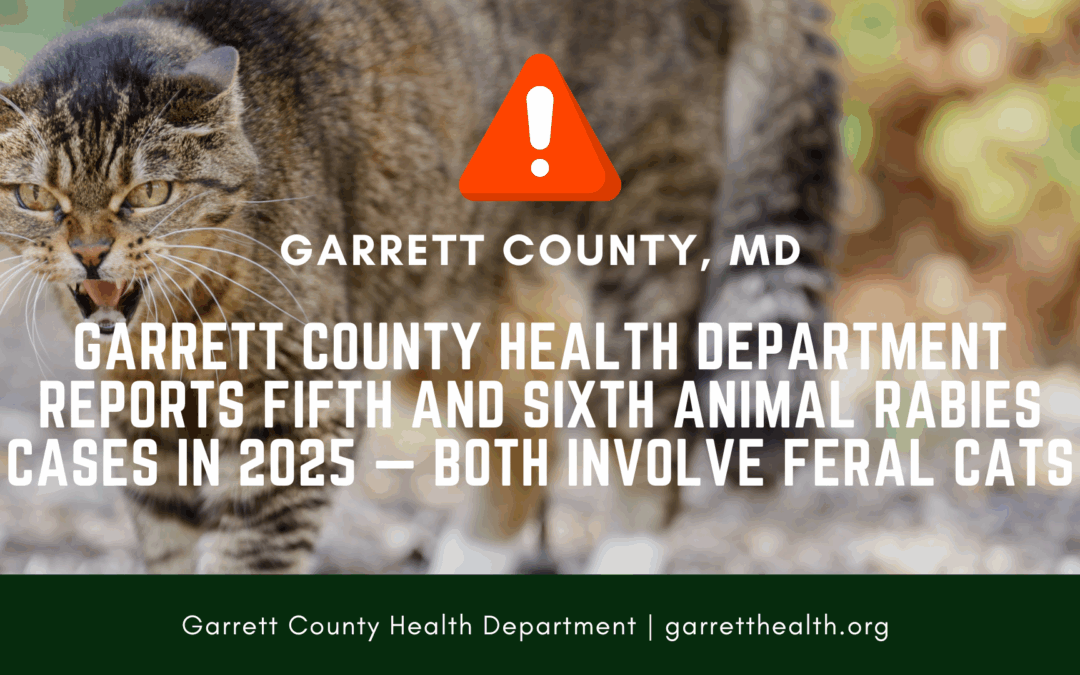
*Note, the photo depicted may not be a match for the cat described. This is a stock photo. Please contact Environmental Health Services Unit for additional details regarding the cat’s exact description.

Contact: [email protected]
- What Is Problem Gambling? - March 6, 2026
- Upcoming Event Scheduled! – Kitzmiller Pickleball Clinic - March 6, 2026
- How to Extend the Life of Your Septic System - March 6, 2026